English Listening Tips: 10 Practical Ways to Improve Skills



English listening is a struggle for many learners, even at an intermediate level. Mastering various accents, speeds, and connected sounds can feel frustrating, but like any skill, English listening can be significantly improved by combining the right strategies with consistent practice. Through this article, you will learn 10 effective tips for listening practice to help you improve your English listening.
🎧 Quick Guide: Mastering English Listening
- Meaning over Words: Stop translating in your head. Focus on the main idea and the speaker's intent rather than individual terms.
- The 70% Rule: Choose content where you understand about 70%. This keeps you motivated while pushing you to learn the rest.
- Consistency is Key: 15 minutes daily is more effective for your brain than a 3-hour session once a week.
- Strategic Subtitles: Listen without subtitles first. Use them only to verify what you heard, then turn them off.
Why English Listening Sounds Hard and How to Fix It
1. Written Words vs Spoken Words
In Spanish, spoken words sound the same as the written ones, but in English, spoken words sound different than the written ones. It comes as a big surprise to many Spanish speakers. Train your ears to the sound of spoken English words.
Exposure to real English audio and conversation to improve your listening. The goal is to not only pay attention to translations of words but also to sounds, intonations, and rhythm.
2. Focus on meaning over individual words
Most English learners can recognize words but not necessarily understand them. While listening to English audio, don’t fixate on translating the words you can identify, in your head. In doing so, you lose track of what the speaker is saying.
Start focusing on the main idea or the meaning of what the speaker is saying. It will take away the stress of translating every word. Put together this and other effective techniques to understand English better.
3. Train Your Ears for Connected Speech
In English, words are rarely pronounced in isolation. Native speakers link words together, creating "connected speech" (for example, saying "wanna" instead of "want to"). To master listening, you must learn to recognize these sound patterns. Start by listening to how the end of one word slides into the beginning of the next.
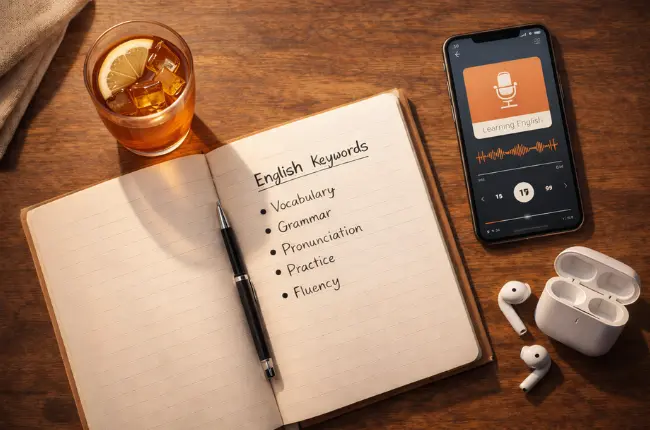
Daily Habits to Train Your Ears
4. Short and Consistent Practice Vs Long Sessions
The habit that matters most in improving your listening skills is the frequency of listening practice. Exposing your ears to English audio daily instead of doing occasional, long listening practices.
Choose a Podcast, YouTube video, movie clip, etc., of a topic that you find interesting and listen to it for the main idea instead of individual words.
5. Practice Active Listening
Listening with a purpose, makes your brain treat English listening like a puzzle, a task it enjoys. Before listening, predict what it is about. While listening, identify the keywords and check if your predictions are right.
Avoid translating every word; only look for translation if necessary to understand the meaning. To do so, use reliable tools that help you understand English without losing the flow.
6. Stick to One Accent at a Time
Especially for beginners and intermediate learners, frequent switching between British, American, or Canadian accents can lead to confusion. Choose one accent that aligns with your goals (like North American English) and focus on it for a few months. Once your ear is comfortable, you can start exploring other global varieties.

How to Use Movies, Podcasts, and Series Effectively
7. Select Content Slightly Above Your Level
Choosing the content that is either too easy or too hard can be frustrating. Select topics that you understand 60-70% and push yourself to understand the rest.
8. Use Subtitles Selectively
Most English learners are addicted to subtitles, while subtitles are useful, constant use of them prevents you from learning the tone and rhythms in English.
Always listen without subtitles first, then use them to confirm what you understand. Gradually remove them completely.
What Not to Do When Practicing English Listening
9. Practicing without a Plan
To improve your listening faster, choose English audio with themes you find interesting and related to your life, studies, or career. Stick with the same set of topics for a period. Jumping between random topics, accents, and difficulty levels can confuse you instead of helping you progress.
For structured guidance and support with experts, an English Class is one of the best strategies.
10. Don't Mistake Exposure for Randomness
Exposure is key to improving your listening skills, but it doesn't mean listening to random noise. Frequent switching between accents, topics, and speeds without a goal leads to frustration. Always choose a set of videos or audios based on the specific vocabulary or accents you are currently working on.
Conclusion: Mastering the Art of Listening
Improving your English listening skills is a journey that requires patience, the right strategies, and, above all, consistency. By moving away from word-for-word translation and embracing the rhythm of real-life conversations, you will unlock a new level of fluency.
Remember, you don't have to do it alone. At Canadian College, our conversation-focused classes and expert teachers are ready to help you turn these tips into lasting skills. Are you ready to stop just "hearing" and start truly understanding? Join us and master English listening today!
Frequently Asked Questions (FAQ)
How often should I practice English listening?
Does watching movies really help improve listening?
Yes, but only if used strategically. To see real progress, you should selectively use subtitles (English only) and gradually reduce them as your comprehension improves. Watching without subtitles forces your brain to focus on sounds and intonation rather than reading.
Why do I understand written English but struggle with spoken words?
Unlike Spanish, which is a phonetic language, English pronunciation often differs significantly from its spelling. This is due to connected speech and vowel shifts. To bridge this gap, you must practice listening to spoken words as much as you practice reading them.
Is English listening harder for beginners?
It can be challenging because your ears aren't used to the new phonemes (sounds). However, by using comprehensible input (listening to material slightly above your current level) and effective strategies, beginners can improve their listening skills surprisingly fast.
References:
- Cambridge Assessment English. (2025). Learning English: Listening activities and strategies.
- VOA Learning English. (2020). How Do I Improve My Listening Skills? (Part 1).
- ETS - TOEFL. (2024). TOEFL iBT Listening Section: Preparation and Practice.
- BBC Learning English. (2025). 6 Minute English: Tips for better listening.
- Oxford TEFL. (2025). 8 Techniques to Teach Advanced Listening Skills.


.svg)